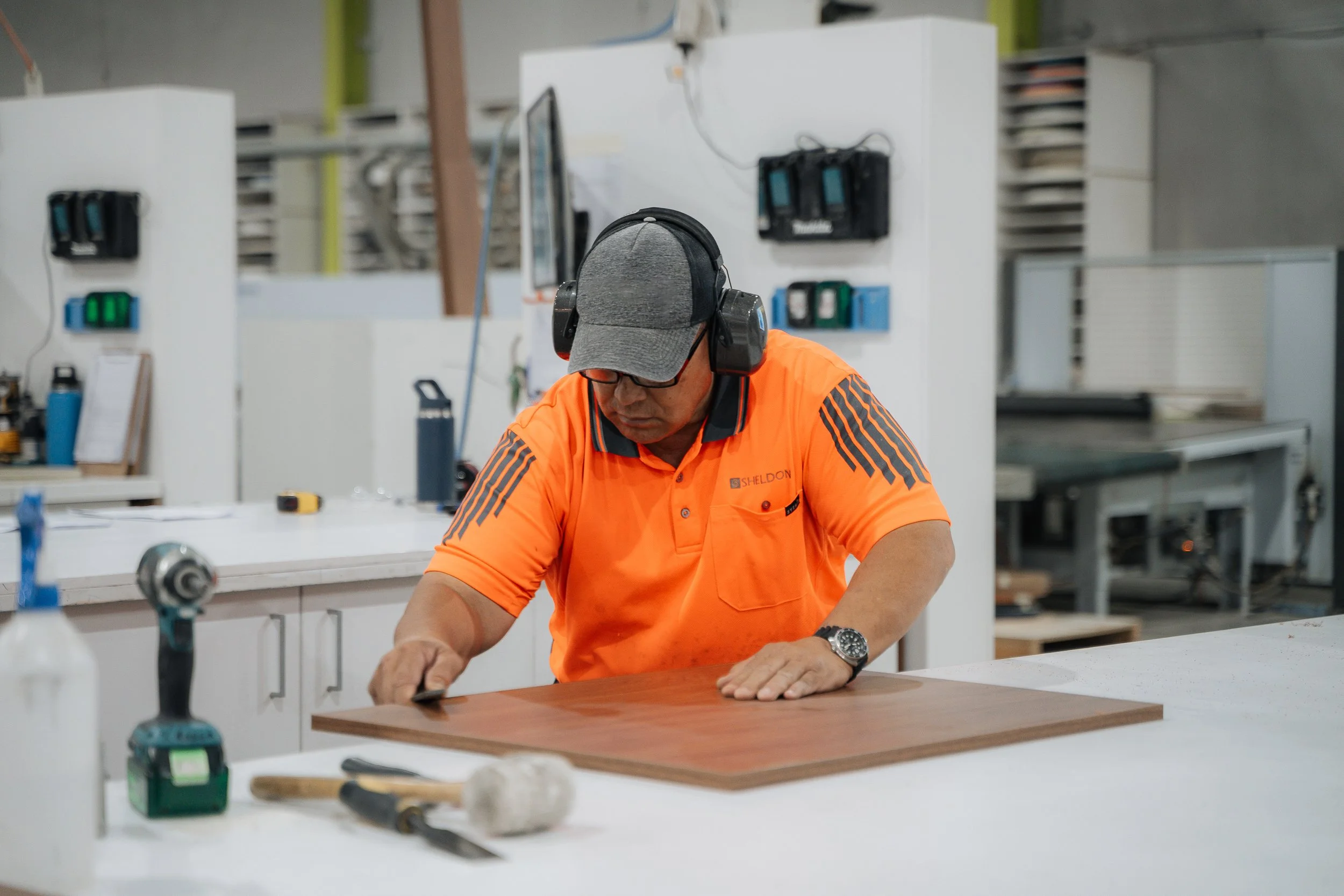
Sheldon Interiors’ Manufacturing Facility Now Running on 100% Renewable Energy with New Solar Panel System
Sheldon has taken another step in its sustainability journey, with the installation of a new solar and battery system at its furniture manufacturing facility in the Central Coast. The upgrade includes a 99kW solar panel system and a 40kWh battery storage system, helping transform the way the facility is powered and reinforcing Sheldon’s broader commitment to practical, measurable ESG outcomes.
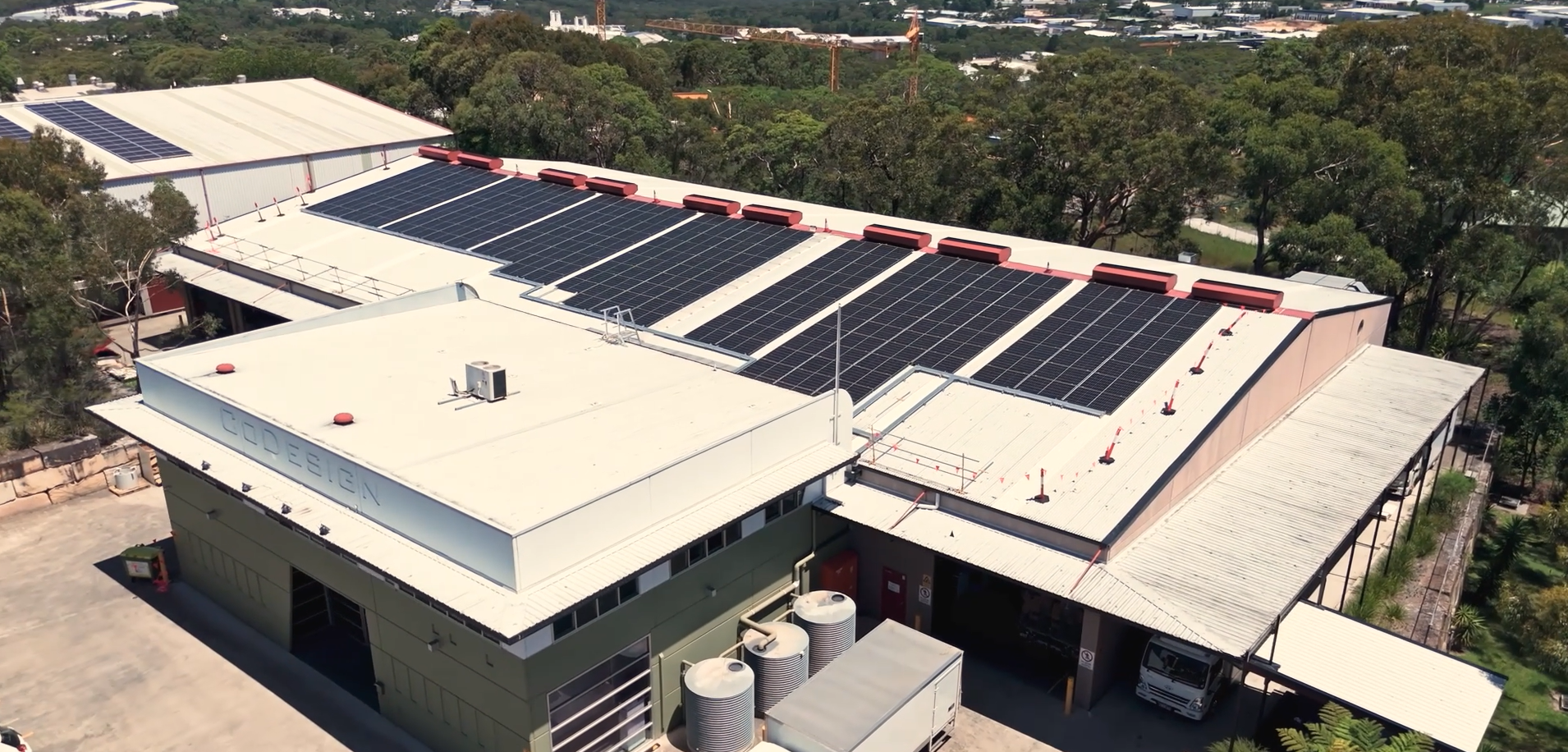
Sheldon’s Manufacturing Facility in Somersby, NSW
As Dan Moroney, Sheldon’s Electrical and Mechanical Division Manager, explains, “During peak energy consumption periods for the factory, 65 to 70% of our power consumption is being generated from our solar panels.” In lower-consumption periods, the impact is even greater, with the facility able to run “completely off grid” in the afternoon. Combined with Sheldon’s purchase of GreenPower for any supplementary electricity drawn from the grid, the facility now operates on 100% renewable electricity.
For a manufacturing centre, that shift delivers benefits beyond reduced emissions. Greater reliance on on-site renewable generation can improve energy resilience, reduce exposure to grid volatility, and support more stable long-term operating costs. For Sheldon, whose in-house furniture manufacturing capability is a key part of its service offering, this also strengthens supply chain assurance, making operations more energy-conscious, future-focused, and resilient, particularly with further electrification of machinery including the use of electric trucks for joinery delivery.
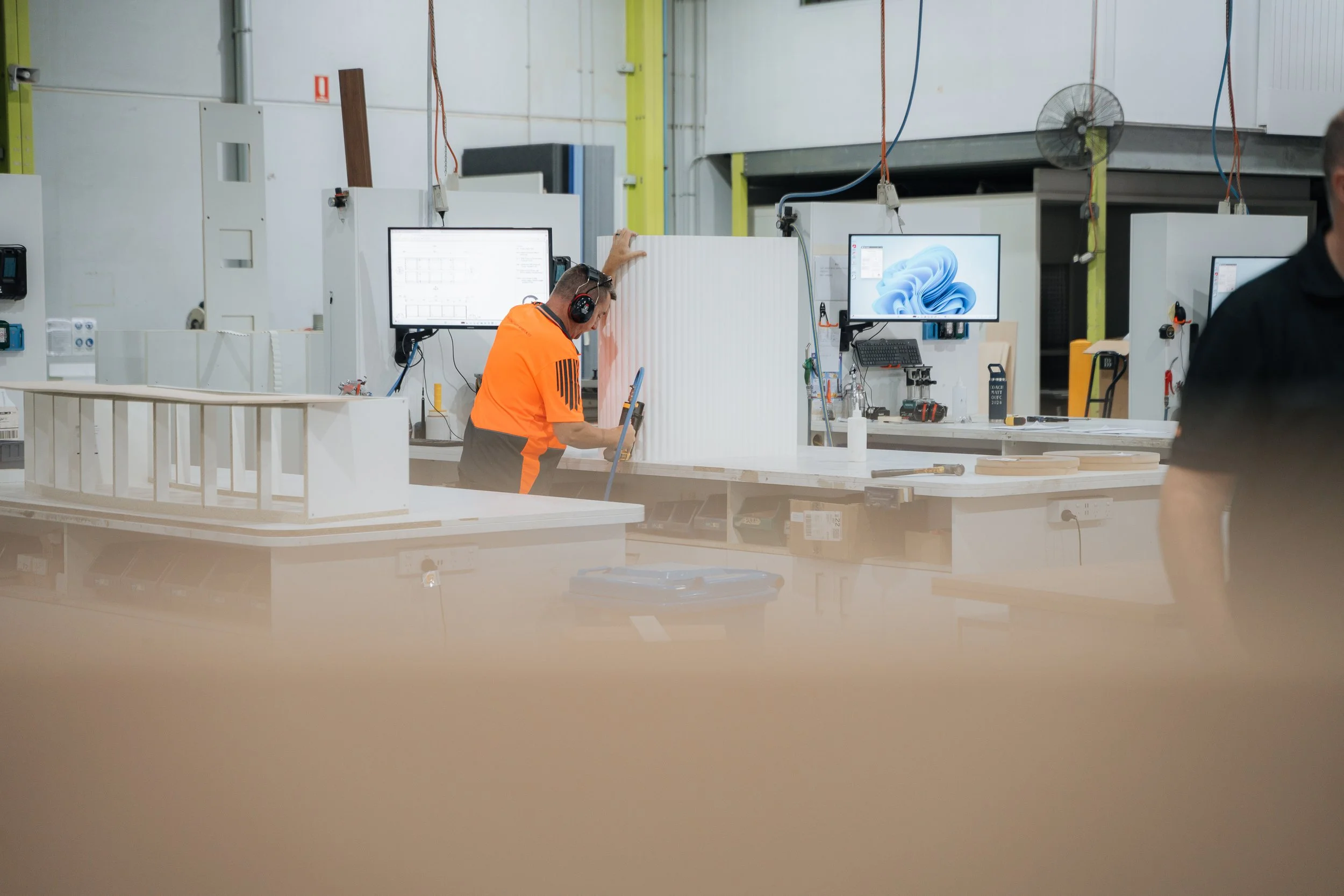
Inside Sheldon’s Manufacturing Facility
The solar installation also aligns closely with Sheldon’s wider ESG and circularity strategy. Sheldon’s sustainability approach is built around optimising environmental performance across design, manufacturing, construction, electrical, and project delivery, with focus areas including emissions reductions, waste management, resource efficiency, energy efficiency, adaptive reuse, and designing for longevity and modularity. Sheldon’s internal divisions are a central part of that model, enabling the business to embed circular thinking and sustainable operations throughout the life cycle of its projects.
As Moroney notes, “Everyone has a role to play in contributing to our sustainability targets.” The new solar system is already prompting Sheldon’s manufacturing team to think ahead to further electrification of equipment and battery use across the facility. It is a practical example of how Sheldon is not only helping clients create more sustainable workplaces, but also investing in the sustainability and resilience of its own operations.
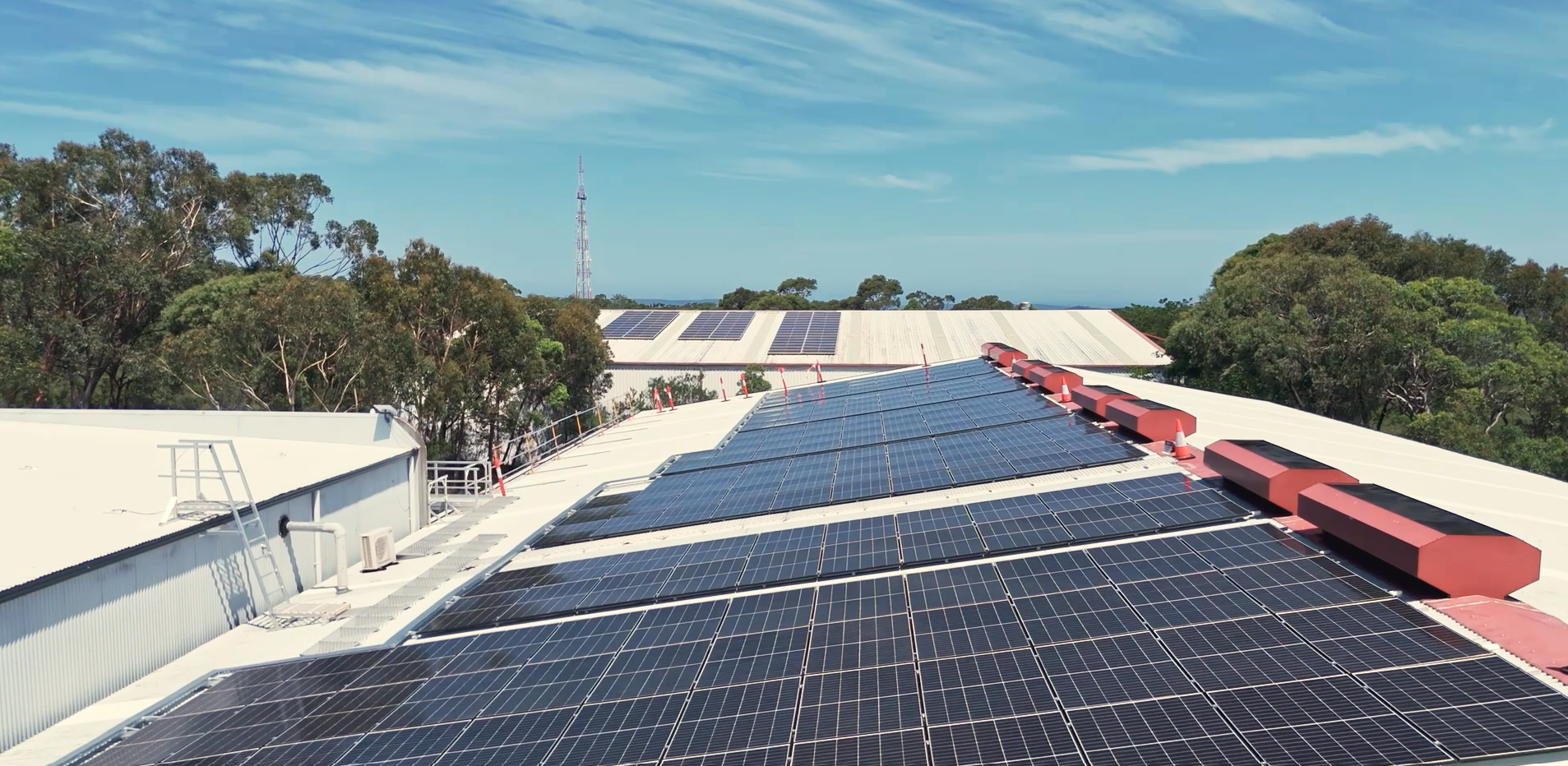
Solar Panels at Sheldon Manufacturing
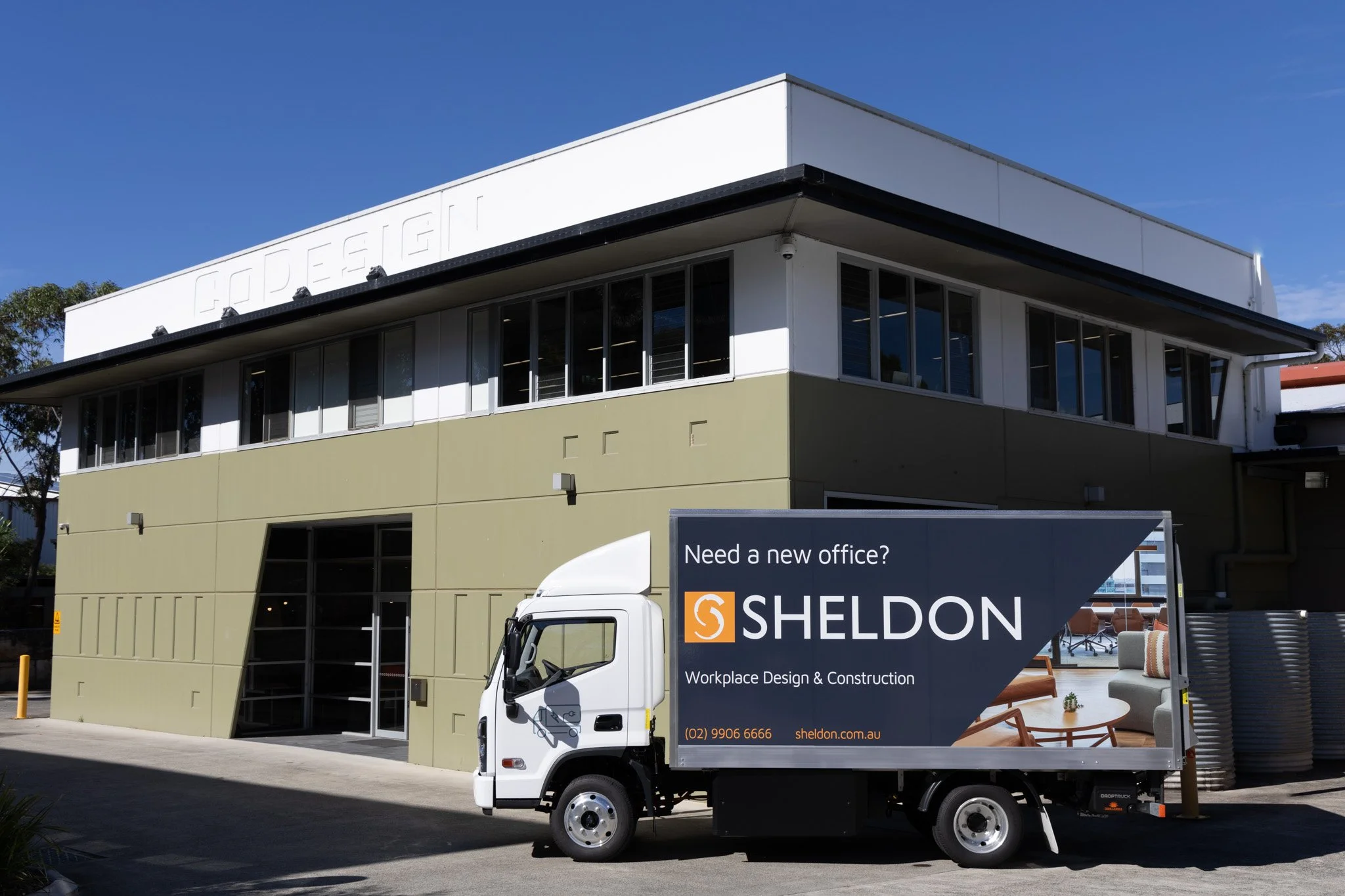
Sheldon’s Electric Truck